
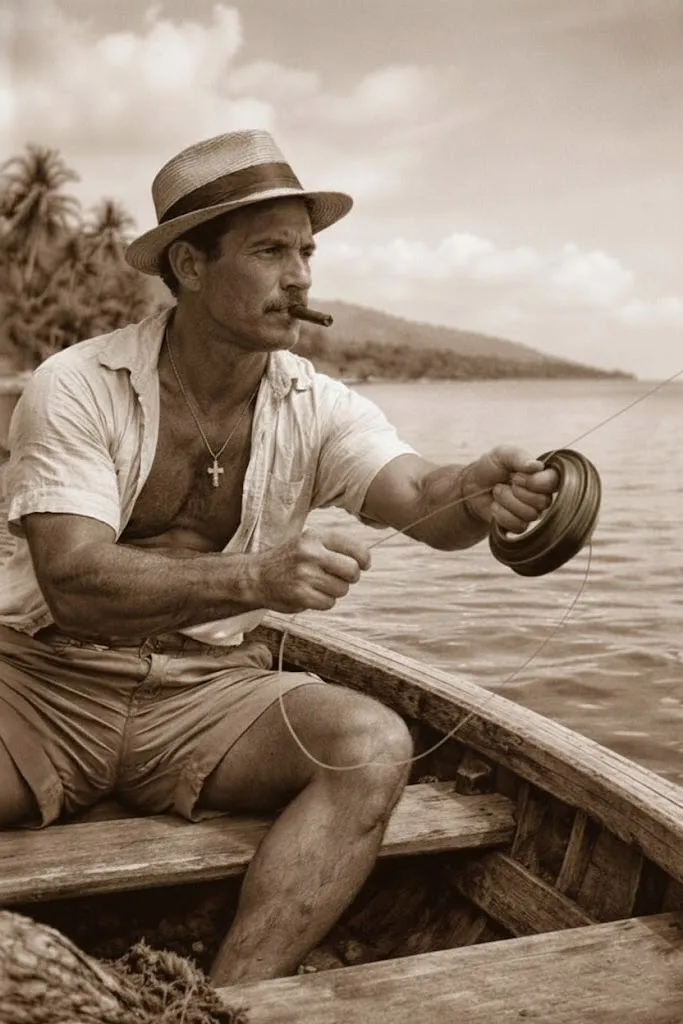
The History of Cuban Yo-Yo Fishing
From Havana's seawall to the world.
Where It All Began
Handline fishing is as old as fishing itself. Long before rods, reels, and tackle shops, fishermen worldwide used nothing but line, hook, and hands to pull food from the water. But in Cuba, this ancient practice was refined into something specific — the yo-yo reel.
On the Malecon — Havana's iconic seafront esplanade — fishermen have cast handlines into the Caribbean for generations. Using simple flat discs wound with heavy monofilament, they target snapper, pompano, and whatever else swims within range of the seawall. For many, this isn't sport — it's sustenance. The Cuban yo-yo was born from necessity: cheap materials, no moving parts, nothing to break or maintain.
The technique is deceptively simple. Wind line onto a flat disc. Let the weighted rig hang. Throw the disc with a sidearm motion — like a frisbee — and the spinning disc pays out line as the bait flies toward the water. Retrieve by hand, feeling every vibration through your fingertips. No drag system smooths out the fight. No rod flex absorbs the headshake. The connection between angler and fish is absolute.
Coming to America
In the 1950s and 1960s, waves of Cuban immigrants brought the yo-yo tradition to South Florida. The technique took root in the Keys, along Gulf Coast bridges, and on Atlantic piers from Miami to Palm Beach. Cuban-American anglers fished the same way their families had fished for generations — only now the water was different.
The Cuban yo-yo quickly proved itself in Florida's rich saltwater fishery. Sheepshead around bridge pilings, mangrove snapper in the shadows, black drum on the bottom — all species perfectly suited to vertical handline drops. The yo-yo wasn't competing with rod-and-reel setups. It was doing something different: fishing structure with surgical precision and zero overhead.
By the 1970s and 1980s, the Cuban yo-yo had become a recognized tool in Florida's tackle shops. Bass Pro Shops stocked the Offshore Angler model. Lee Fisher made them in bulk. A cottage industry of hand-poured sinkers and pre-rigged yo-yos sprouted in bait shops from Key West to Jacksonville.
The Vintage Era
The handline reel wasn't exclusively Cuban. In the 1960s, the Olympic Reel Company manufactured the “Mr. Fisherman” — an elegant handline reel that sold across the United States. Similar designs appeared in Japan (where they're still called “Japanese reels”), across the Pacific Islands, and throughout Southeast Asia. Handline fishing is a global tradition with many names.
Today, vintage handline reels from the mid-century era are prized collector items. The Mr. Fisherman reels surface on eBay and in antique shops, still functional after six decades. They represent a time when fishing gear was built around simplicity rather than complexity — a philosophy that never really went away.
The Modern Revival
In the 2010s and 2020s, handline fishing experienced a renaissance. A new generation of anglers — drawn to minimalism, ultralight backpacking, kayak fishing, and survival preparedness — discovered what Cuban fishermen had known for decades: you don't need $500 worth of gear to catch fish.
The market responded. Brands like Daggerfish Gear, KP Micro Reel, GoReel Pro, Chill Reel, EZ Reel, and the Yoyito (a CNC-machined aluminum Cuban yo-yo) entered the space. YouTube channels dedicated to handline fishing gained followings. Facebook groups like “Hand line fishing share/educate” grew to over 7,000 members. The handline wasn't a relic — it was a movement.
Meanwhile, the Cuban yo-yo itself kept evolving. The Yoyito creator — a software engineer who grew up fishing with Cuban yo-yos in Cuba and South Florida — analyzed fishing as a calorie-acquisition problem and concluded that handlining was the most efficient method. He machined the traditional flat disc from aluminum, refining the edges and balance for better casting performance.
YO Fishing's Place in the Story
YO Fishing was born from this same tradition. We looked at the Cuban yo-yo — its simplicity, its directness, its zero-maintenance philosophy — and asked: what if we kept everything that works and added sidecast control?
The YO Reel rotates 90 degrees between retrieve and cast positions, giving anglers a clean sidecast release and controlled recovery that the traditional flat disc can't match. It's not a replacement for the Cuban yo-yo. It's the next chapter in a story that started on the Malecon.
From Havana's seawall to Florida's bridges to anglers worldwide — the handline tradition continues. And we're proud to be part of it.
A Living Tradition
Key moments in the history of handline fishing and the Cuban yo-yo.
Ancient Origins
Handline fishing practiced worldwide for thousands of years. From Pacific island communities to Mediterranean coastal villages, fishermen used nothing but line, hook, and hands to pull food from the water.
1950s–60s
Cuban immigrants bring yo-yo fishing to South Florida. The technique takes root in the Keys, along Gulf Coast bridges, and on Atlantic piers. Olympic Reel Company produces the Mr. Fisherman handline reel.
1970s–80s
Cuban yo-yo becomes a tackle shop staple across Florida. Pre-rigged models sold at Bass Pro Shops. A cottage industry of hand-poured sinkers and ready-made yo-yo rigs sprouts in bait shops from Key West to Jacksonville.
2010s
Modern handline renaissance begins. Brands like Daggerfish Gear, KP Micro Reel, GoReel Pro, and Chill Reel enter the market. YouTube channels dedicated to handline fishing gain dedicated followings.
2020s
Facebook community reaches 7,000+ members. Handline fishing recognized as a legitimate, growing discipline. The Yoyito CNC-machined aluminum Cuban yo-yo launches. YO Fishing enters development.
Today
The handline tradition continues to evolve. New materials, new designs, and a global community of anglers carry the craft forward.
Go Deeper
Explore guides, community, and the full handline fishing experience.
Cuban Yo-Yo Fishing Guide
Deep dive into the Cuban yo-yo: rigging, techniques, species, and expert tips for getting the most from a flat disc reel.
What Is Handline Fishing?
The complete beginner’s guide to handline fishing — what it is, why anglers love it, and how to get started.
The Handline Community
Connect with thousands of handline anglers sharing catches, rigs, and knowledge across social media and in-person meetups.
The tradition continues. See the next chapter.
YO Reel